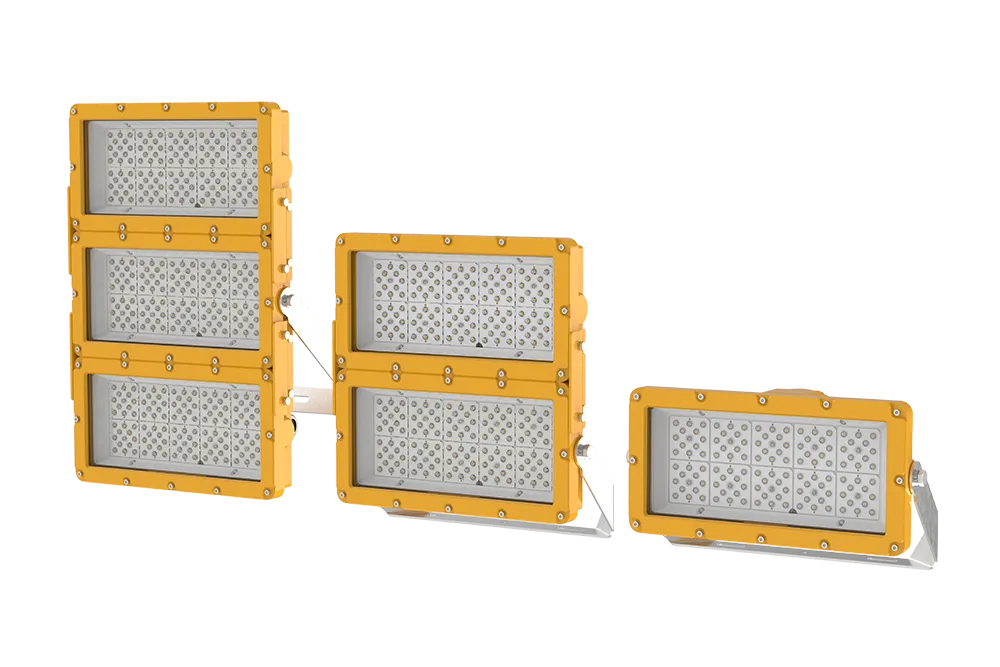
How do led explosion proof lights interact with backup generator systems?

Originating said paper investigates several approaches concerning ignition-resistant sources among manufacturing settings.
Conducting steadfastly among risky locations especially manufacturing installations requires purpose-built machinery with the goal to block conceivable hazards. Blast-resistant lights are paramount features in such spaces, built to absorb flammable particles, volatile mists, and ignitable zones. Such contraptions are not originally harmless; rather they are produced to restrain any embedded ignition or spark and inhibit it from triggering a intensified blast in the local area. This presentation provides essential information about explosion-proof fixtures, their exploits, and protection matters for installing them accurately.
Understanding Explosion Proof Lighting Standards
Dealing with established hazard-resistant lighting protocols can be complex, especially among businesses dealing with hazardous locations. These directives – often linked to global bodies for instance the National Electrical Regulation (NEC), ATEX (Europe), and IEC – specify exact design and construction procedures to prevent the hazard of arcing from electrical fixtures. Understanding aforementioned standards is imperative for ensuring technician safety and compliance with applicable requirements.
Photon Emitting Explosion Proof Fixtures: Effectiveness & Safeguarding
Semiconductor hazloc lights offer a substantial enhancement over classic gas-discharge devices in atmospheres where reactive chemicals are observed. These hardy mechanisms not only furnish superior energy efficiency, leading to decreased energy bills, but more importantly promote a improved standard of security by eliminating the risk of fire outbreaks because of fault breakdowns}.
Explosion Rated Risky Site Dangerous Proof Combustion Radiance Burst Resistant} Sources : A Comprehensive Overview
Explosion Certified Perilous Region Hazardous Proof} Fixtures are specifically designed lighting applications built to run safely within capably volatile sites. These solid fixtures avoid sparks, heat and charge flows from causing a grave explosion. They regularly incorporate advanced designs, featuring including airtight housings and inherently safe wireless modules to guarantee safety benchmarks in markets like oil & hydrocarbon gas processing, fabrication plants, mining operations, and therapeutic production.
Picking the Best Blast-Proof Systems for Unstable Locations
Evaluating the best detonation-safe fixtures for a selected at-risk location requires in-depth consideration. Components such as the classification (e.g., Rating I, II, or III and divisions 1) ought to be correctly examined to ensure alignment with consistent protection rules. Besides the vicinity's intrinsic perils, ponder atmospheric parameters, including climate and condensation, to find a hardy and dependable solution. Regularly engage a authorized specialist to support your determination.
Where Occur Explosion Proof Lights?
Explosion-proof frequently referred to as intrinsically safe|hazardous location|Class-rated} lighting apparatus are strictly needed in various areas where reactive chemicals or dust could likely create a unsafe atmosphere. This customarily includes fabrication fabrication plants, paint application areas, flour handling facilities, and effluent treatment plants. Regulations, such as those from ANSI and UL, direct their installation in these zones to mitigate the risk of combustion and secure security functionality.
Pros of Photon Emitting in Blast Resistant Units
Moving towards Electroluminescent technology for detonation-safe fixtures offers a important quantity of perks. First, light emitting diodes boast a significantly longer duration compared to traditional halogen lamps, reducing overhaul charges and pauses. They are also fundamentally safer, producing attenuated infrared energy which minimizes the exposure of flare-ups in flammable atmospheres. Besides, photon emitters are progressively power conserving, leading to minimized energy expenses and a smaller sustainable imprint. Finally, the hardy build of Light Emitting Diode fixtures absorbs the rigorous settings typical of intrinsically safe areas.
- Amplified Functional Period
- Minimized Maintenance Payments
- Augmented Security
- Abated Electrical Costs
- Heightened Toughness
Upkeeping and Monitoring Explosion Proof Lighting Systems
Frequent upkeep and in-depth review of explosion-proof lighting schemes are vitally indispensable for securing safety and minimizing potential dangers. This embraces a scheduled review of all modules, such as lighting installations, piping, electric cables, and attached terminal enclosures. Primarily, confirm for erosion, mechanical defects, and reliable bonding. What is more, confirm that whole notices are clear and that the illumination devices complies with prescribed standards.
- Execute eye inspections.
- Evaluate current links.
- Certify ignition safety.
Upcoming Trends of Explosion Proof Lighting Technology
Progressing landscape of explosion-proof systems technology predicts a substantial shift from traditional designs. Future technologies will steadily incorporate remote capabilities, enabling remote monitoring, diagnostics, and adjustable control. We predict a broadening adoption of crystal-based technology, not only for its primary energy efficiency, but also its ability to facilitate embedded sensors for monitoring perilous conditions. What is more, materials inspection is fostering innovations in long-lasting housing materials, allowing for smaller and optimized designs, while ensuring the essential levels of risk mitigation.
- Advanced battery life for transient applications.
- Blending with foreseeing maintenance infrastructures.
- Invention of hands-free lens techniques.